
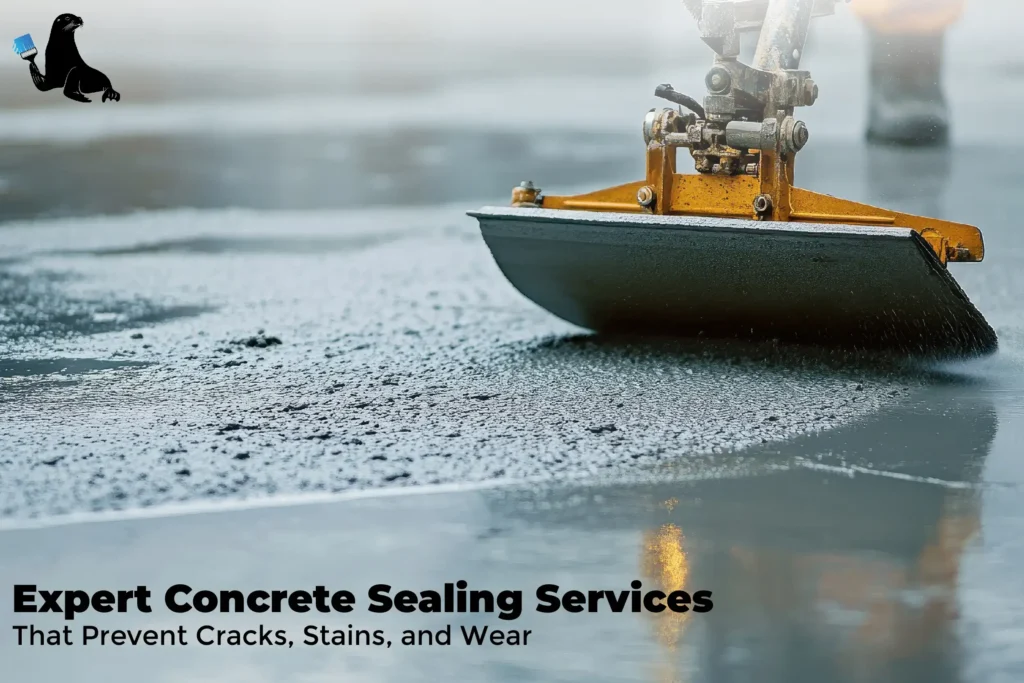
Professional concrete sealing is not an option when it comes to covering concrete surfaces in order to protect your property. Be it your commercial premise or residential building, unsealed concrete is always under constant attack. The attacks must be water infiltration, chemical attacks, freeze-thaw processes and daily wear. When you are looking to find a reputable concrete sealing service in Cincinnati, OH, knowing the difference between amateur and professional workmanship will save you thousands of dollars in repairs and replacements.
Why Professional Concrete Sealing Matters?
Concrete may appear to be a material that cannot be destroyed yet it is a porous material. It carries water, oils, salts, and chemicals like a sponge. In the absence of protection, such substances go deep into the surface leading to deterioration internally. Expert concrete sealing services provide a protective layer that provides lasting protection. On top of that, it will make sure your concrete lasts long without affecting the appearance or structural properties of the concrete.
The difference between DIY sealing and professional application becomes clear within months. A local concrete sealing company has the expertise in surface preparation and sealer choice. They are well aware of useful application methods that provide maximum adhesion and performance. Locals are also well aware of Cincinnati’s environment that include severe weather in the winter as well as excessive humidity in the summer. That’s why they choose sealers that are specially designed to survive in these conditions.
The Foundation: Proper Surface Preparation
Thorough preparation makes all the difference as professionals prepare it before any sealer touches your concrete. This is an important step in the process of ensuring lasting protection and avoiding failures that waste your investment.
Concrete surface inspection identifies the presence of damage, contamination, and moisture that should be addressed before the subsequent inspections. Professional contractors search for oil stains, efflorescence, past layers of sealer and structural issues. They check the level of moisture to ensure conditions are ideal for sealer application.
Proper surface preparation involves the removal of contaminants by cleaning the surface and removing irregularities. A final preparation on the surface of the concrete is done so that the maximum sealer can penetrate. This may involve either pressure washing, chemical cleaning or mechanical abrasion based on the surface conditions.
Crack Repair: The Essential Pre-Sealing Step
Crack repair before sealing is one of the most serious requirements of professional service. Sealing on cracked and spoilt concrete does not stop cracks as well as prevent cracks and surface damage. It covers the problem temporarily while allowing it to worsen underneath.
Professional technicians consider the severity and the cause of every crack. The treatment of hairline cracks is not similar to that of structural fractures. They apply flexible repairing compounds. When the concrete expands and contracts, professionals use a flexible compound to prevent cracks from reopening. This consideration of underlying matters will see your sealed surface work as anticipated over the years.
Choosing the Right Sealer for Your Application
All concrete sealers do not provide the same protection. Professional contractors match sealer types to specific applications and performance requirements. Penetrating concrete sealers go beneath the surface and react with the concrete to produce water repelling features. These breathable solutions are outstanding in exterior use where moisture vapour needs to escape.
To get maximum durability and resistance to chemicals, an epoxy concrete sealer near Cincinnati, OH would be the best choice. The epoxy concrete sealer mixtures form a hard impermeable surface that is perfect for garage floor sealing and in a commercial setting where there is heavy traffic, oils, and chemicals. They also provide breathtaking aesthetic finishes to different colors and textures.
Application-Specific Sealing Solutions
Various concrete surfaces have different challenges that demand distinct solutions:
- Driveway concrete sealing should be able to resist wheeled traffic, tyre patterns, oil spills, and deicing salts. These sealers are made to strike a balance between driveway durability while being slip resistant and UV stable to avoid yellowing.
- Garage floor sealing requires chemical resistance to automotive fluids. It provides easy-to-clean and stain-resistant concrete surfaces that do not pick up hot tires.
- Sidewalk and walkway sealing is primarily focused on slip resistance and weather protection. This sealing has a natural appearance that complements landscaping.
Commercial Concrete Sealing Services Cincinnati, OH
Commercial concrete sealing services provide services to larger business projects, using specialized equipment and products that cure faster. They also make sure that the least amount of business disruption is created. Warehouses, stores, restaurants, and manufacturing premises are enjoying tailored sealing solutions that suit industry needs in safety, hygiene and durability.
Long-Term Value and Protection
Investment in professional sealing will give a payback in the form of long lifespan of the concrete, lower maintenance expenses, and property value. Sealed concrete is resistant to staining as well as easy to clean and does not change its appearance. Whether you are using it on a daily basis or exposed to the environment.
When you are ready to protect your concrete investment with services that deliver lasting results, trust Complete Seal Solutions. They offer professional applications supported by industry skills and dedication to quality. Professional sealing is not a cost; it is a guarantee of one of the most significant structural components of your property.
FAQs
What is the lifespan of concrete sealing?
Outdoor concrete sealing normally lasts between 3 to 5 years and indoor concrete sealing lasts between 5 to 10 years depending on the traffic and the environment.
Is epoxy sealer better than traditional sealers?
An epoxy sealer is more durable and chemically resistant on high traffic environments whereas penetrating sealers are better suited to breathable natural environments that look natural.
When should concrete be resealed?
Reseal when water no longer beads on the surface. You can do it after every 2 to 5 years depending on wear and traffic levels as well as exposure to harsh conditions.
Is concrete sealing worth the cost?
Absolutely. Sealing will save you expensive repair expenses, extend concrete lifespan by decades, save on maintenance and shield your property investment against untimely degradation.
Can I seal concrete myself or hire professionals?
Professional application by Complete Seal Solutions ensures perfect surface preparation, choice of sealer and technique to be applied to provide high quality results as opposed to DIY efforts.